
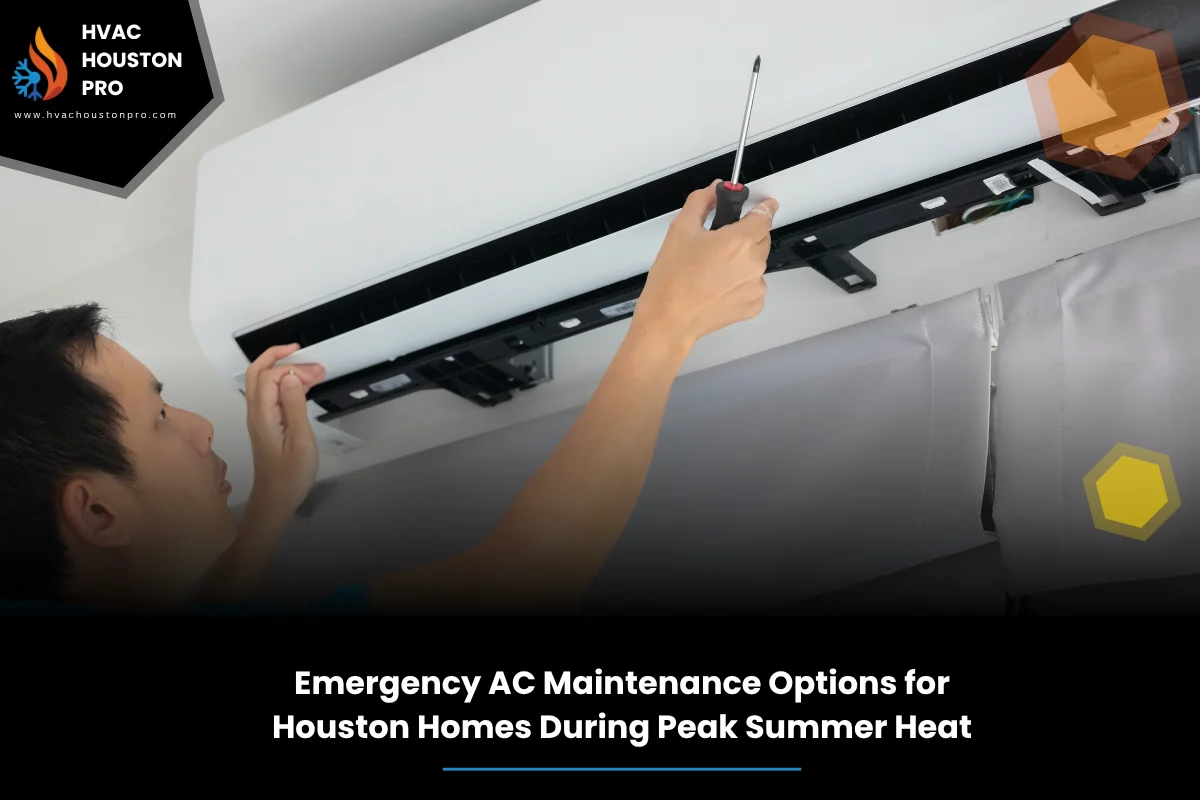
When the air turns thick and the house feels stuffy, seconds matter. If your system stalls or blows warm air, you need straight steps you can act on now. This guide maps quick choices and smart moves for emergency AC maintenance Houston, so your home gets stable, safe, and cool again.
You do not need fancy tools to triage. You need calm checks, clean airflow, and a plan for what to try first. If the issue is bigger, you will also know when to stop and call a tech.
And if you prefer steady care after this scare, the maintenance basics we mention here connect with the broader, seasonal routines you will find in the complete guide to AC maintenance in Houston for long, reliable comfort. When summer peaks, that mix of fast fixes and routine tune-ups is what holds the line.
The first time you see the business name here, know we keep it short and practical: HVAC Houston Pro handles the jobs you do not want to deal with, from AC and heat to power and plumbing, in homes and small shops. No fluff. Just work that holds up.
Table of Contents
Quick Summary
Start with simple checks: set the thermostat to cool and 74 to 76, ensure the fan is on auto, open supply vents, and check the filter. Listen for the outdoor unit. If it is silent, check the breaker. If air is weak or warm, look for ice on lines and water around the indoor unit.
If you see ice or smell burning, power the system off and let it thaw. Avoid running a frozen unit. If breakers trip again or you hear humming with no fan, stop. You may be facing a capacitor or motor issue. DIY ends where safety begins.
When heat is extreme, same-day help is ideal. If the home is safe and you get partial cooling, you can stretch to a next-day visit. Either way, log what you tried and the times. That note helps the tech find the fault faster.
Why ACs Struggle in Peak Heat
ACs hate clogged filters, blocked coils, and tight attics. Heat and humidity push systems to the edge, and any small restriction piles on. Weak airflow makes coils run too cold, ice forms, and cooling slides fast. In many homes across Houston TX, dusty returns and packed filters are the first culprits.
High outdoor temps also expose low refrigerant, dirty condenser fins, and marginal capacitors. These issues may limp along on a mild day but fail in a heat wave. For deeper seasonal routines that prevent these weak points, see the Complete Guide to AC Maintenance in Houston TX for Reliable Summer Comfort. It pairs well with this fast response playbook.
Lastly, closed interior doors can upset pressure in the home and starve returns. Keep doors cracked when you can, and clear space around supply vents by a few feet.
First-Hour Triage When the AC Is Not Cooling Efficiently
Thermostat: confirm cool mode and a setpoint below room temp. Replace batteries if the screen is dim. Fan should be on auto, not on, so coils can drop heat correctly.
Filter: pull it and hold to light. If you cannot see light through media, replace it. A clean filter restores airflow fast and often boosts cooling within minutes.
Breaker and switch: check the outdoor unit breaker and the indoor service switch. If a breaker trips again, stop. Repeated trips mean a deeper electrical fault that needs a pro.
Outdoor unit: clear leaves and brush within two feet. If the fan is not spinning but you hear a hum, kill power. That could be a failing capacitor or motor.
Same Day vs Next Day vs DIY: What Fits the Situation
Use this quick view to decide your next move without second guessing. It weighs safety, speed, and the likely fix type.
| Option | Best for | Pros | Risks |
|---|---|---|---|
| Same-day visit | No cooling, breaker trips, ice on lines, burning smell | Fast diagnosis, protects system | Higher demand windows, brief wait |
| Next-day visit | Partial cooling, weak airflow, noisy but running | Lower stress, time to prep area | Heat load on home for one night |
| DIY short-term | Dirty filter, blocked vents, cluttered outdoor unit | Immediate relief, no cost | Missed deeper faults if symptoms return |
Match the option to your symptoms. If safety flags pop up, skip DIY. If the system cools but lags, a tidy-up and next-day slot is fine. Keep your notes handy; a clear timeline helps the tech zero in on the fault.
Rapid Response Framework for Houston Homes
Step 1: Stabilize. Set cool mode, 74 to 76, and auto fan. Move heat-making tasks to evening. Keep blinds closed on sunny sides. This reduces load while you troubleshoot.
Step 2: Restore flow. Replace the filter, open all supply vents, and crack closed doors. Vacuum return grilles. Air that moves well cools better.
Step 3: Inspect safely. Walk outdoors. If the condenser fan stalls or you hear a hum, cut power at the disconnect. A safe shutdown avoids damage while you decide next steps.
Step 4: Log symptoms. Note sounds, smells, and temps at supply vents. Take photos of any ice or leaks. If you want deeper background on seasonal tasks that prevent emergencies, check the complete guide on this topic and build a simple home checklist.
Step 5: Decide path. Use the table above to pick same day, next day, or DIY. If anyone in the home is heat sensitive, choose the fastest safe option.
When to Call for Professional Help
Call if breakers trip more than once, if the outdoor unit hums but does not spin, if you see ice on copper lines, or if drain overflow trips the float switch. Persistent short cycling or a musty, sour smell also calls for trained eyes.
In peak heat, clear and simple scheduling works best. When you need a fast, on-site check, use emergency AC maintenance Houston to request a focused visit. Share your notes, photos, and any filter or breaker details. That reduces guesswork and speeds the fix.
While you wait, avoid turning the thermostat way down. That does not cool faster and can cause icing. Keep doors closed to the outside, use ceiling fans, and hold off on laundry or cooking that adds heat.
Preventive Moves After the Crisis
Once cooling is stable, lock in simple habits. Replace filters every one to three months, hose off outdoor fins gently from inside out, and keep shrubs trimmed back at least two feet. These small tasks prevent repeat failures.
Schedule a spring and fall tune-up. A pro will check refrigerant level, test capacitors, clean coils, and confirm condensate drainage. That kind of preventive maintenance lowers the chance of mid-summer surprises.
For a wider plan that covers seasonal chores, signs of wear, and timing, review the complete guide to AC maintenance in Houston for reliable summer comfort. It pairs routine care with practical steps that fit normal home life.
Safety and Energy Tips Backed by Authorities
Do not run a frozen system. Ice means poor heat transfer, and running it risks compressor damage. Power it down and let it thaw before any restart. Keep a simple rule: when in doubt, shut it off and wait for a check.
Set modest thermostat setbacks. During heat waves, steady settings help more than big swings. According to U.S. Department of Energy guidance, regular filter changes and proper thermostat use support comfort and efficiency.
U.S. Department of Energy. Energy Saver: Maintaining Your Air Conditioner
FAQs
- Why is my AC running but not cooling well?
Likely causes include a clogged filter, blocked coils, low refrigerant, or weak airflow from closed vents and doors. Start with filter and vent checks. If air is warm or you see ice, shut it off and plan a service visit.
- Is it safe to reset a tripped breaker?
You can try once. If it trips again, stop. Repeated trips point to an electrical fault like a failing motor or capacitor. Call a pro to avoid damage or shock risk.
- How long should I wait after thawing a frozen AC?
Let the system thaw fully, often a few hours, then start with fan only for 30 minutes to dry the coil. Switch to cool and monitor. If ice returns, book service.
- Can a dirty filter really cause an emergency?
Yes. A packed filter chokes airflow, makes coils too cold, and can lead to icing and water leaks. The fix is cheap and fast: replace filters on a steady schedule.
- Should I turn the thermostat way down to cool faster?
No. Lower settings do not speed cooling. They only make the unit run longer. Use steady targets, close blinds, and run ceiling fans to feel cooler.
- What noise should make me shut the system off?
Humming with no fan spin, metal-on-metal scraping, or a strong electrical smell are stop signs. Power down and wait for a technician to prevent bigger damage.
- What can I prep before a tech arrives?
Clear access to the indoor unit and thermostat, note the timeline of symptoms, replace the filter if dirty, and keep pets secured. Share breaker and ice observations.
Conclusion
Heat waves test every weak link in a cooling system. With this guide, you can triage fast, choose the right response, and keep the home safe while you wait. The core moves for emergency AC maintenance Houston are simple: stabilize, restore airflow, inspect safely, log symptoms, and decide the right help.
After the crisis, keep up with routine care so small issues do not return at the worst time. If you want help building a light, seasonal checklist, or you need a same-day look, keep your notes ready and reach out. Contact HVAC Houston Pro for expert assistance.
continue reading
Related Posts
AC not cooling Houston? Use this clear, step-by-step guide to fix warm air fast, spot risky signs, and know when to call for help. For homes and apartments.
Learn the signs your AC needs maintenance before Houston heat hits. Spot weak airflow, dirty AC coil symptoms, and clogged condensate drain line early to avoid breakdowns.