
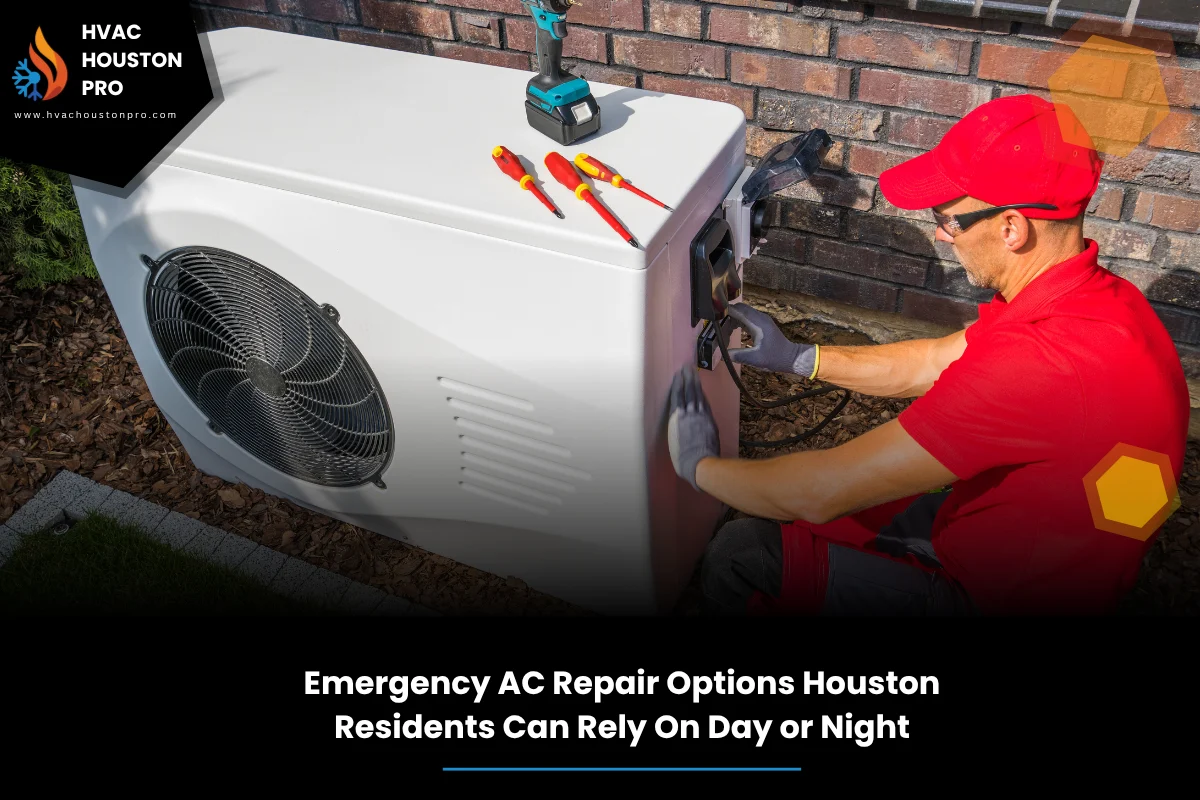
Heat in Houston can jump fast, and when the air stops, the house feels tight and sticky. In that moment, you don’t want a lesson on HVAC. You want the air back on. This guide breaks down real-world choices for emergency AC repair Houston, what you can try first, and how to decide between midnight help or a morning fix. We keep it simple, no fluff.
At HVAC Houston Pro, we handle the stuff you don’t want to deal with until it stops. This article stays educational and neutral. It explains how emergency calls work, what techs do, and how to prep your space so the fix goes faster. You’ll also see when 24-hour help makes sense, and when same day repair is enough.
Table of Contents
Quick summary
When your AC quits at night or over the weekend, start with safe checks, then choose the best path: 24 hour AC repair Houston for no-cooling situations or leaks, and same day AC repair Houston for non-urgent problems. As covered in The Complete Guide to AC Repair Houston TX for Reliable Summer Cooling, a clear checklist reduces guesswork and speeds up diagnosis. Keep notes on symptoms, breaker status, filter condition, and noises. This helps any tech find the fault faster and keeps the visit tight and focused.
Is it a true emergency or can it wait?
Every outage feels urgent, but not all need a 2 a.m. visit. If the system will not cool at all, you see water near the air handler, smell burning, or hear a harsh buzzing, treat it as a no-cooling emergency. Also urgent: elderly residents, infants, or heat-sensitive health concerns.
Less urgent signs include uneven cooling, short cycling with some cooling, or a thermostat that seems off but still runs the unit. These can often hold until morning with fans and a lower load on the home.
What causes after-hours AC breakdowns
Common causes include a failed start capacitor, a weak contactor, low refrigerant from a slow leak, or a clogged drain switch that shuts the system down to stop water damage. Heat and long run times push weak parts over the edge. A small issue in spring becomes a big one in July.
If you like the bigger picture, the complete guide to AC repair in Houston TX explains how these parts work together and what a tech tests first. In many midnight calls, a capacitor failure or safety switch trip sits at the top of the list.
First 10 minutes: safe checks before you call
Do not open panels or touch wiring. Keep it simple and safe. Check the thermostat mode and setpoint. Replace batteries if it is a battery model. Confirm the system is set to Cool and the fan is Auto, not On, to avoid warm air blowing nonstop.
At the breaker panel, look for a tripped breaker. If you find one, reset it once. If it trips again, stop. That points to a deeper fault. This single, safe breaker reset can save an after-hours visit if it holds.
Swap a dirty filter. If airflow was choking the system, you might get cooling back for the night. If you hear grinding, smell burning, or see water, power the unit off at the thermostat and call.
24-hour vs same day vs routine: choose the right lane
Choosing between 24 hour AC repair Houston, same day AC repair Houston, and routine AC repair Houston comes down to risk, comfort, and cost. Use this quick table to weigh options by urgency and impact. The key is picking the right response window for your situation.
| Option | When it fits | Pros | Trade-offs |
|---|---|---|---|
| 24-hour emergency | No cooling, leaks, burning smells, health risks | Stops damage and restores cooling fast | After-hours rates; limited part availability at night |
| Same day | Intermittent cooling, short cycling, thermostat issues | Fast fix during business hours | May wait a few hours; heat load can rise |
| Routine repair | Mild issues, seasonal tune-ups | Lower cost, flexible timing | Not for urgent failures |
If you are unsure, play it safe. Power off a system that smells hot or shows water. For comfort-only issues with some cooling left, a morning call often works fine.
FAST COOL framework: a steady plan for night or weekend failures
Use this simple plan to cut stress and speed up any visit. It is not technical. It is a tidy checklist you can follow in minutes. For deeper background on system basics, see the complete guide on this topic after you stabilize the situation.
F: Find the symptoms. Note if air is warm, system is silent, or only the outside unit runs. A: Airflow check. Look at vents and filter. S: Settings. Confirm mode, setpoint, and batteries. T: Trip check. Look for a one-time breaker trip.
C: Contain water. If you see drips, place a pan and turn the system off. O: Observe noises or smells. Be brief and safe. O: Open windows at night to vent heat if safe. L: List what happened before it failed. This FAST COOL checklist helps a tech move fast.
What to expect when you call for help
Have your notes ready: symptoms, breaker status, filter condition, and any noises. Share the property type and any access rules. Ask for a clear dispatch ETA, part availability, and what happens if the unit needs a temporary cool-down step before a full fix.
If your home has no cooling and heat is building, do not wait. You can reach out for emergency AC repair Houston to stabilize the system and prevent damage. For mild comfort issues, a same day window can keep costs lower.
Prevent emergencies before summer peaks
Small steps cut midnight failures. Change filters on schedule, keep returns clear, and rinse the outdoor coil with a gentle hose stream when it is off. A spring tune helps catch weak capacitors, low refrigerant, or a slow drain before the heat spike.
According to U.S. Department of Energy (2023), clean filters improve airflow and efficiency, helping systems run cooler and last longer. U.S. DOE Energy Saver: Central Air Conditioning
Walk your home on the first hot week. Listen for new sounds. Check for warm rooms or weak vents. A quick note to a scheduler early in the season is easier than a 2 a.m. call in July.
Budgeting for after-hours repairs
Emergency visits cost more than daytime calls. That premium covers rapid response, night labor, and limited parts access. Use these simple tiers to plan ahead for after-hours diagnostic and repair work in USD. Actual pricing may vary depending on scope and requirements.
| Tier | What it usually includes | Estimated range |
|---|---|---|
| Basic | Night diagnosis and simple fixes like a capacitor or contactor | USD 150 to 350 plus parts |
| Mid-range | Drain clearing, thermostat replacement, minor electrical or refrigerant top-up | USD 300 to 700 |
| Advanced | Major component replacement or complex electrical tracing | USD 700 to 1,500+ |
To reduce surprise costs, keep records from each visit. Patterns help catch repeat faults early. For budgets, same day AC repair Houston during business hours can be a good middle ground when the system is still holding some cooling.
FAQs
- How do I know if I need 24-hour help or can wait for morning?
No cooling, water leaks, burning smells, or health risks call for 24-hour help. If the unit cools a bit and the home is safe, a morning visit is usually fine.
- Why does my breaker keep tripping when the AC starts?
It could be a failing start part or a short. Reset once only. If it trips again, stop and call. Repeat resets can cause more damage.
- Will an emergency tech have every part on the truck?
Most carry common parts. Rare boards or specialty items may need a follow-up. The goal at night is safe cooling or a solid temporary step.
- Is same day repair cheaper than after-hours service?
Usually yes. After-hours rates are higher. If comfort and safety allow, book a same day slot to save.
- What should I do if I see water near the air handler?
Turn the system off, place a pan or towels, and call. A drain switch may be stopping the unit to prevent damage.
- How often should I change AC filters in Houston heat?
Check monthly in summer. Replace when dirty or at least every 1 to 3 months, based on filter type and dust load.
Conclusion
When the air stops, the first goal is simple: make the space safe and cool again. Use the steps here to decide between night help and a morning slot, and to share clear notes that speed the fix. When it is a true outage, act fast and steady. If it can wait, plan the visit and protect the system.
This guide keeps choices clear for emergency AC repair Houston so you can solve the problem without panic. For routine planning, think through filters, drains, and a spring check to lower risk. Contact HVAC Houston Pro for expert assistance. And for deep system know-how, pair this guide with the broader ideas in the complete guide to AC repair in Houston TX so you stay ready for the next heat wave.
continue reading
Related Posts
Learn how same day AC repair Houston keeps homes safe in extreme heat. Get a simple outage framework, risk checks for apartments and seniors, and clear steps to stay cool.

Learn what an AC inspection Houston includes, from safety checks and airflow to refrigerant and drainage. Use it to build a smart maintenance checklist for steady cooling.
Learn air conditioning maintenance Houston options for homes: DIY basics, annual tune-ups, and plans. Compare choices, set a seasonal checklist, and know when to call a pro.