
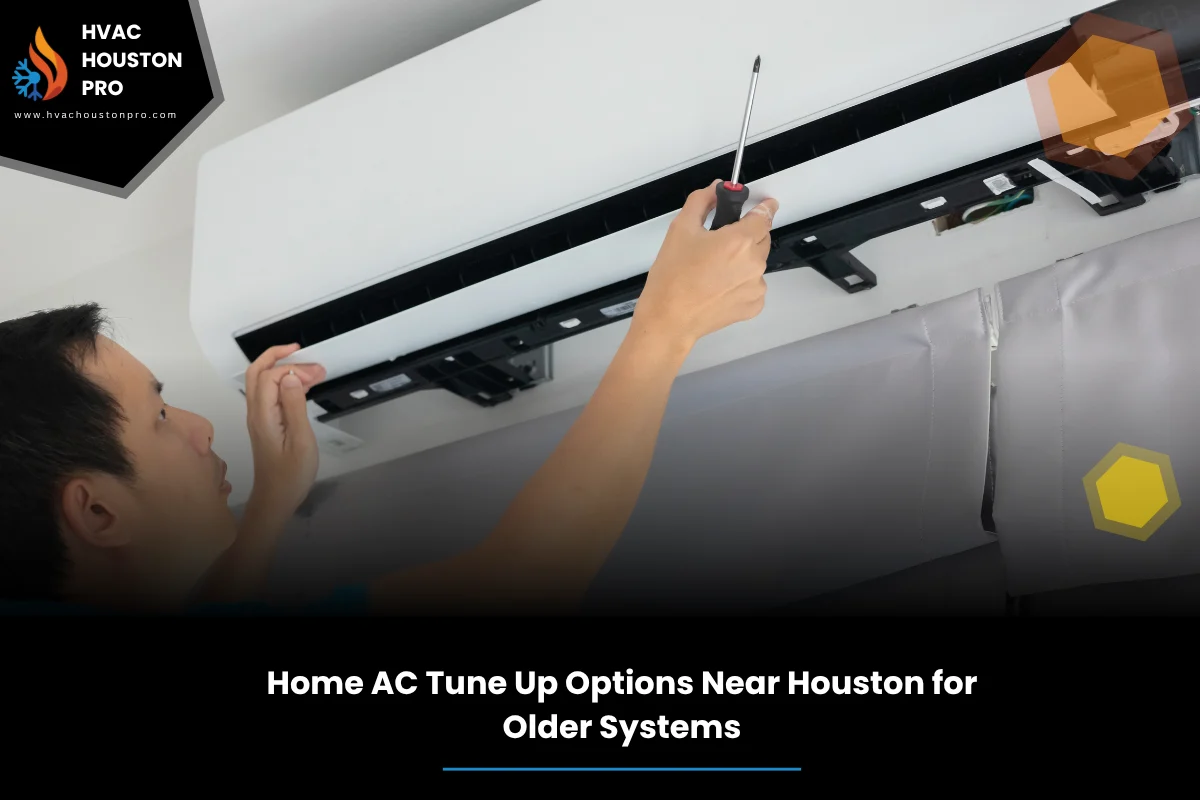
Old ACs can still cool well, but they need more care. If you are weighing a home AC tune up near Houston for a tired system, this guide lays out clear options that match age, budget, and comfort goals. We keep the jargon light and the steps simple, so you can act with confidence.
HVAC Houston Pro works across home systems daily, so we see what keeps older units steady through peak heat. The trick is steady attention at the right times, not a flurry of fixes after the fact. With a little planning, you can stretch life, cut noise, and even lower bills.
We will cover signs your unit needs help, what a proper tune up includes, and smart timelines for Houston’s weather. You will also see when to hold the line and when it is time to plan for change. Let’s keep your older system cooling with fewer surprises.
Table of Contents
Why Houston heat hits older AC units harder
Houston’s long, humid summers push aging compressors and fan motors to their limits. Heat and moisture build up on coils and in drain lines, and that strain shows fastest on units past the 10-year mark. A focused seasonal inspection helps catch small issues before a long run makes them worse.
If you want a deeper playbook for local schedules and checklists, see Complete Guide to AC Maintenance in Houston TX for Reliable Summer Comfort for a full maintenance roadmap. That core topic pairs well with the older-system options in this article.
Local habits matter too. Many homes crank the thermostat low on the first hot day, then never look back. That first surge can expose weak parts, especially if filters are clogged or ducts leak. If you have skipped past AC tune up Houston seasons, start fresh now.
Clear signs your older AC needs attention
Watch for warm air at vents, longer run times, and rooms that never quite catch up. A musty smell or water near the air handler points to a clogged drain or coil issues. Short cycling and tripped breakers hint at electrical stress.
Notice uneven cooling from room to room. That often ties to duct leaks or low blower output. A quick static reading and airflow testing can confirm what your ears and skin already suspect.
If you search for AC inspection Houston, you will see many checks listed. Focus on core health items first: cooling output, airflow, refrigerant pressures, and safety controls. Cosmetics can wait.
What a thorough tune up should include on aging equipment
Older units need more than a fast once-over. Cleaning and testing come first, then adjustments. Expect coil and blower care, drain clearing, electrical tightening, and proper refrigerant evaluation.
Good work always starts with coil cleaning on both condenser and evaporator. Dirty fins choke heat transfer and force long runtimes. The tech should also inspect the blower wheel and housing for dust mats that sap airflow and add noise.
Next, look for solid electrical checks, temperature drop across the coil, and a careful refrigerant assessment.
Options to consider: DIY checks, pro maintenance, or upgrade
Not every older system needs the same level of attention. This table helps sort common paths based on condition and goals. Use it to match effort to payoff before the peak heat truly hits.
| Option | What it covers | Best for | Risk if skipped |
|---|---|---|---|
| DIY basics | Filter swaps, clear outdoor unit, gentle hose rinse on condenser fins | Homes with steady performance and clean ducts | Clogged airflow, higher bills, hotter rooms |
| Pro tune up | Full cleaning, electrical tests, drain flush, temp split, refrigerant charge check | Units 7+ years old, rising bills, mild comfort issues | Hidden faults grow, surprise breakdowns in heat |
| Targeted repairs | Capacitor, contactor, blower or fan motor replacement | Units with clear single-point failures | Repeat trips, more parts fail under stress |
| Upgrade planning | Load review, duct fixes, high-SEER options | Units with frequent failures or major leaks | Ongoing costs outpace value, comfort never stabilizes |
A simple 5-step framework to plan your season
Use this quick plan to steady an aging system before summer rush. It balances basics, pro checks, and follow-up so you avoid scramble mode later.
- Do a fresh filter replacement and clear 2 feet around the outdoor unit.
- Run a 15-minute test on a warm day. Note vent temps, noises, and any smell.
- Schedule a pro tune up for coil cleaning, drain flush, and electrical checks.
- Fix small items right away. Delays often turn cheap parts into bigger repairs.
- Recheck performance in two weeks. If problems linger, plan targeted repairs or a replacement path.
For step-by-step detail on maintenance timing and what each check means, skim the complete guide on this topic and keep this options list handy for older units.
Cost and risk tradeoffs for older systems
With age, each skipped season nudges risk higher. Dirt on coils and low airflow drive longer runtimes, which heat up motors and raise bills. Targeted checks like a static pressure test and temperature split reading tell you if the system is working hard or smart.
If a unit fails often, keep score. Add up time lost, stress, and repair totals over a season. When repairs become routine, a planned upgrade beats a mid-July breakdown. But if a tune up brings temps and run times back in line, you can likely ride another year.
Focus on what you can measure. Vent temps, runtime, noise level, and even humidity feel. These simple markers help you call the next step with less guesswork.
Planning residential AC maintenance in Houston, TX
Heat and humidity demand a steady calendar. For reliable performance across Houston TX neighborhoods, aim for spring cleaning and a late-summer check if the unit is older. That pattern fits most residential AC maintenance Houston needs and keeps surprises low.
When you are ready to book a visit, you can request a home AC tune up near Houston to line up a practical inspection and cleaning before peak heat. Pair that with monthly filter checks and you will have fewer panicked calls.
Older homes may also need duct sealing or small airflow tweaks. Build those into your plan when test results show weak rooms or loud returns. A simple maintenance plan beats emergency fixes every time.
Safety checks that protect older systems
Electrical parts age under heat. Ask for tightness checks on lugs, wire condition, and proper breaker sizing. Quick tests like capacitor testing and contactor inspection catch many no-cool calls before they happen.
According to U.S. Department of Energy (n.d.), routine maintenance like filter changes and professional servicing helps keep air conditioners efficient and reliable across seasons. Maintaining Your Air Conditioner
Drain safety matters in humid months. A flushed trap, clear pan, and working float switch stop messy overflows. Keep a small wet-dry vac handy for the cleanout if your line clogs mid-season.
When to consider replacement instead of another tune up
If the compressor is noisy, refrigerant leaks keep returning, or parts are scarce, start planning. A quick load calculation ensures the next system matches your home, not just the old nameplate. Also look at ducts; leaky runs will hobble even a new unit.
If you searched for residential AC maintenance Houston and feel stuck in a repair loop, compare total yearly costs with the comfort you get back. When a tune up plus targeted fixes restore temps, wait. When comfort stays shaky and costs rise, move to a plan.
Keep records after each visit. Data from two seasons tells a clearer story than one hot weekend.
Quick Summary
Older ACs can run well in Houston heat with smart care and timing. Handle basics, book a solid tune up, and follow up fast on small issues. A simple schedule, clear tests, and a steady preventive maintenance mindset save you stress. Use the options table and the 5-step plan to match effort to system age.
FAQs: Older AC tune ups near Houston
- How often should I tune an older AC?
Once a year before summer is the baseline. If the unit is over 10 years old or runs nonstop, add a late-summer check to spot wear and drain issues early.
- What is the most important part of a tune up?
Thorough coil cleaning and airflow checks. Without clean coils and proper flow, the system runs longer, gets hotter, and fails sooner.
- Can I do my own checks on an older unit?
Yes. Change filters, clear the outdoor unit, and rinse the condenser gently. Leave electrical tests, refrigerant work, and deep cleaning to a pro for safety and results.
- Will a tune up lower my energy bills?
Often. Clean coils, tight ducts, and a proper temperature split reduce runtimes. Savings vary, but steady care usually cuts waste and improves comfort.
- What if my AC short cycles?
Short cycles may point to a weak capacitor, dirty coils, or low airflow. A quick thermostat calibration and electrical check can confirm the root cause fast.
- Is refrigerant top-off a fix for poor cooling?
Not by itself. Low charge signals a leak. The right approach is leak find-and-fix, then proper charging. Topping off without repairs invites repeat failures.
- How long does a professional tune up take?
Usually 60 to 90 minutes for older systems, longer if coils are heavily soiled or drains are clogged. Plan extra time if parts need replacing.
- When should I think about replacing the unit?
Consider replacement if breakdowns repeat, refrigerant leaks return, or comfort stays poor after a full tune up and needed repairs.
Conclusion
An older system can still carry you through a Gulf Coast summer with the right care. Start with the basics, get a full tune up, and track results so you know your next move. If you need a home AC tune up near Houston, plan it before the first heat wave for faster service and fewer surprises.
Use the options in this guide alongside the broader complete guide to AC maintenance in Houston to shape your plan. Keep notes on temperatures, run times, and noises to spot changes early. Contact HVAC Houston Pro for expert assistance.
Stick with a steady seasonal tune up habit, and most older systems will give you more quiet, more comfort, and fewer emergency calls when the sun bears down.
continue reading
Related Posts
Learn how to spot early AC trouble fast. From warm air to short cycling, smells, and weak airflow, this guide shows simple checks and when to plan home air conditioner repair Houston.
Learn how a steady AC tune up Houston routine keeps rooms cool and bills down. See what pros check, simple DIY steps, and a seasonal plan that fits Houston heat.