
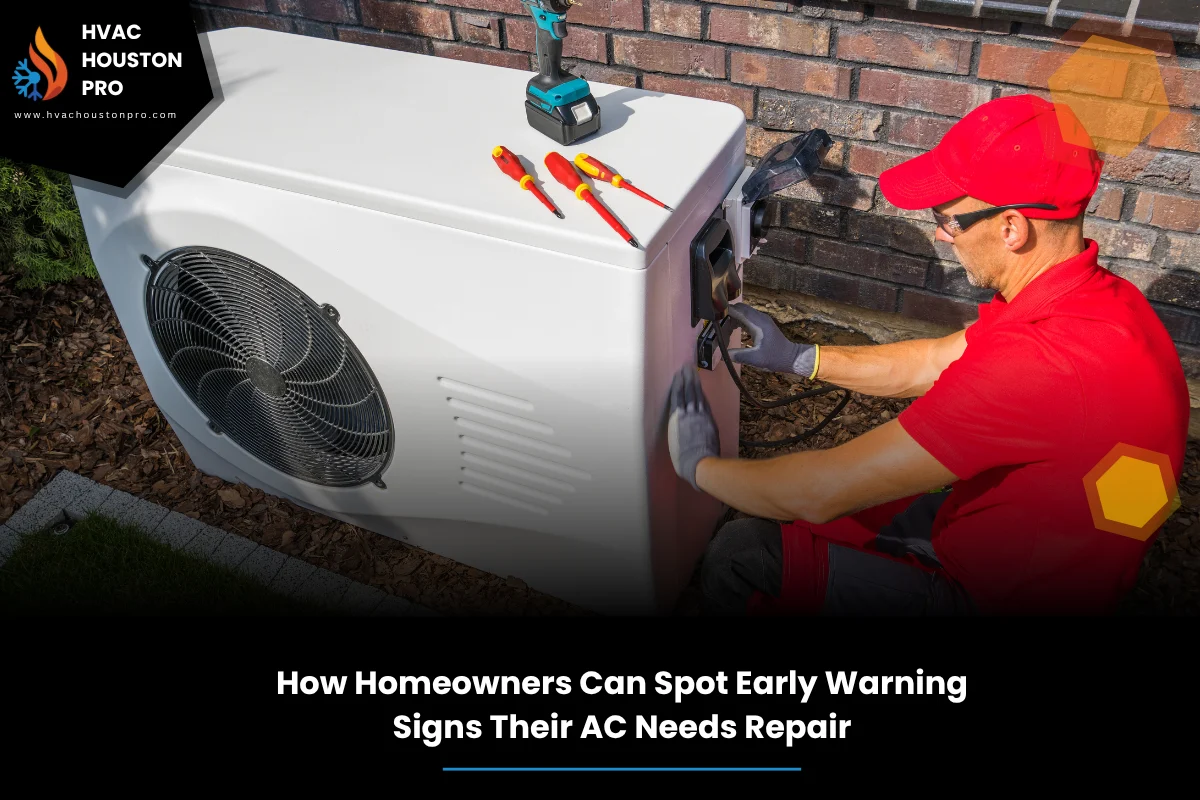
You do not need tools to notice trouble. Your system leaves clues long before it quits. When you catch them early, you avoid long waits, higher bills, and long hot nights. This guide shows simple ways to read those signs and decide your next move for home air conditioner repair Houston.
The team at HVAC Houston Pro sees the same patterns in homes and small apartments every day. Warm air. Short cycles. New noises. A faint smell that was not there last week. We keep this simple and plain so you can act fast and avoid bigger fixes later.
Use these checks as a quick screen. If one sign pops up, watch it. If two or more stack up, plan action soon. Your goal is steady cooling, safe power use, and less strain on the parts that cost the most to replace.
Quick Summary
Early AC warnings usually show up as weaker cold air, longer or shorter run times, odd noises, new smells, small leaks, or a jump in the power bill. Start with easy checks: filter, vents, thermostat settings, and the outdoor unit for debris. If issues stack up or repeat, a pro visit prevents bigger damage. For a deeper dive into parts, maintenance, and repair choices, read The Complete Guide to AC Repair Houston TX for Reliable Summer Cooling as a companion to this quick hit list.
Why catching issues early matters
Small faults grow under heat and time. A loose wire turns into arcing. A clogged filter strains the blower. Low refrigerant runs the compressor hot. Spotting early warning signs gives you time to plan a calm fix instead of a rush job at 8 pm.
Early action also keeps comfort steady. Short fixes often cost less than parts replacement later. It also keeps energy use lower because an AC in distress wastes power while trying to reach your set point.
How Houston heat shapes AC symptoms
High heat and humidity push AC systems hard. Moist air adds load, so your system must pull water out as it cools. That extra work makes weak airflow and dirty coils show up faster. If you find yourself searching for AC not cooling Houston every summer, this section is for you.
On hot, sticky days, a modest change in airflow or charge feels bigger indoors. Watch for rising indoor humidity, longer run times, and sweating ducts. These are classic high cooling load flags that point to maintenance or repair needs.
Cooling performance flags you can trust
Air from the supply vents should feel clearly cooler than room air. If you notice AC blowing warm air, test a nearby vent with your hand. Warm supply air often ties back to low refrigerant, a stuck reversing valve on heat pumps, a tripped heater strip, or a control issue.
Also watch how long it takes to reach the set temp. If rooms stall a few degrees below your set point or swing up and down, you likely have airflow loss, coil issues, or a control problem. These are signs to address before summer peaks, starting with the filter and moving toward a check of warm air from vents causes.
Noises and smells you should not ignore
Clicking at startup, grinding during the run, or a screech that fades in a minute all point to moving parts in distress. A loose blower wheel, failing motor bearings, or a contactor on its last legs can create those sounds. Sounds that get worse week to week deserve a pro look soon.
Smells tell stories too. A musty odor hints at drain issues or wet dust on coils. A sharp, hot odor can be a sign of wiring or motor trouble. Treat a strong burning smell like a red light. Turn the system off and check the breaker and air handler area for safety.
Short cycling and startup failures
Your system should run steady, then rest. If it starts and stops every few minutes, you are dealing with short cycling. Common causes include a clogged filter, frozen coil, faulty thermostat placement, low refrigerant, or a safety switch tripping. For AC short cycling fix basics, start with the filter, clear the outdoor coil, and verify thermostat location is not in the sun.
If the AC unit not turning on at all, check the thermostat mode, replace batteries, confirm breakers, and look at the float switch near the drain pan. Water in the pan can stop the system to prevent leaks. No change after these checks means you need a safe electrical and control test by a pro.
Airflow and duct clues inside the home
Poor airflow hides in plain sight. A dirty filter, blocked return grille, closed supply vents, or crushed flex duct reduce air volume. Less air means colder coils and less moisture removal, which can cause icing and water leaks. A quick filter change can prevent a service call tied to a frozen coil caused by a clogged filter.
According to the U.S. Department of Energy (n.d.), routine filter changes and coil cleaning help maintain performance and reduce energy use, especially in hot climates. Maintaining Your Air Conditioner
DIY checks vs professional diagnostics
Some checks are quick wins at home. Others need tools and safety steps. Use this table to decide which path fits the symptom.
| Symptom | DIY First Step | What a Pro Tests | Risk if Ignored |
|---|---|---|---|
| Warm air from vents | Replace filter, clear outdoor coil | Refrigerant charge, metering device, reversing valve | Poor cooling, compressor strain |
| Short cycling | Check thermostat batteries and placement | Low voltage, control board, safety switches | Higher bills, early part failure |
| Unit won’t start | Confirm breakers and float switch | Capacitors, contactor, motor windings | No cooling, possible electrical hazard |
| Musty smell, water near air handler | Clear drain line trap | Pan cracks, drain slope, coil cleanliness | Mold growth, water damage |
When DIY steps do not move the needle, consider safe diagnostics that include electrical tests and sealed-system checks. If you need help choosing next steps or scheduling a check, see home air conditioner repair Houston to learn how a technician approaches these symptoms without guesswork.
A simple 5-step framework to act fast
Use this quick flow to cut stress when a symptom pops up. It keeps you safe and saves time if you need to call for help later. For more context on parts and common fixes, you can also read the complete guide on this topic as a deeper reference.
- Confirm the symptom: time it, note rooms, and record the thermostat reading.
- Shut it down if you hear harsh sounds, smell burning, or see frost or water near the unit.
- Do safe basics: change the filter, open blocked vents, clear debris from the outdoor coil.
- Re-test after 30 minutes: note any change in airflow, temperature, or run time.
- Document: take photos and short notes. Share them if you schedule service.
FAQ
- Why is my AC blowing warm air?
Common causes include a dirty filter, outdoor coil blockage, low refrigerant, or a control issue. Start with the filter and a visual coil check. If nothing changes, a tech should test charge and controls.
- What is short cycling, and is it bad?
Short cycling is rapid on-off behavior. It strains parts and wastes energy. Check your thermostat placement and filter first. If it keeps happening, the cause may be refrigerant or electrical and needs a pro.
- My AC unit is not turning on. What should I check first?
Verify the thermostat mode and batteries, check breakers, and look for a tripped float switch at the drain pan. If it still will not start, avoid repeated restarts and call for diagnostics.
- Do closed vents help cool unused rooms?
Usually no. Closing vents raises static pressure and can cause icing and leaks. It is better to keep vents open and balanced. Use a proper zoning setup if you need room-by-room control.
- What smells mean I should turn the AC off?
A sharp burning odor, a strong chemical smell, or smoke means stop and investigate power and safety. Musty odors suggest drain or coil cleaning but are not typically an emergency.
- How often should I change my filter in summer?
In heavy use, check monthly and change when dirty. Homes with pets or dust may need faster changes. Clean filters protect coils and motors and help cooling stay steady.
- Can high humidity make my AC seem weak?
Yes. Moist air takes more work to cool and dry. Humidity problems highlight airflow or coil issues sooner. If rooms feel clammy, look at airflow and drainage first.
- When should I stop DIY and call a professional?
If basic steps fail, if you see ice, hear grinding, smell burning, or the breaker trips, stop. These signs point to electrical or refrigerant issues that need safe tools and training.
Staying alert to the classic early signs helps you avoid breakdowns during peak heat. Keep an eye on airflow, sounds, smells, and run time. If two or more issues appear at once, plan next steps soon. For steady comfort and lower risk, use this guide or plan for home air conditioner repair Houston when needed. Contact HVAC Houston Pro for expert assistance.
continue reading
Related Posts

Get clear, practical options for a home AC tune up near Houston, especially for older systems. Learn signs, what a proper tune up covers, and a simple 5-step plan.
Learn how a steady AC tune up Houston routine keeps rooms cool and bills down. See what pros check, simple DIY steps, and a seasonal plan that fits Houston heat.